Platform comparison
| Platform | YES odds | NO odds | Fee | KYC | Settlement | |
|---|---|---|---|---|---|---|
Polymarket (via Oscar Predictions 2026) Pick polygram.ink (preferred broker) |
53% | 47% | 0% (USDC on-chain) | No-KYC up to $1,500 | USDC, auto via UMA oracle | Trade this market → |
Polymarket (direct) polymarket.com |
53% | 47% | 0% | Geo-blocked in US/UK/EU | USDC, on-chain | Trade this market → |
Kalshi kalshi.com |
— | — | Up to 7% per trade | US-only, KYC required | USD | Trade this market → |
Betfair Exchange betfair.com |
— | — | 2-5% commission | Full KYC from first trade | GBP / EUR | Trade this market → |
Manifold Markets manifold.markets |
— | — | Play-money (mana) | None — play-money | Mana (no cash-out) | Trade this market → |
Outcome probabilities
Current market-implied probability for each outcome, from the live order book.
| Outcome | Probability |
|---|---|
| September 30 | 53% |
| August 31 | 19% |
| August 15 | 3% |
| June 26 | 0% |
| July 3 | 0% |
| July 10 | 0% |
| July 31 | 0% |
| July 17 | 0% |
| August 7 | 0% |
Market context
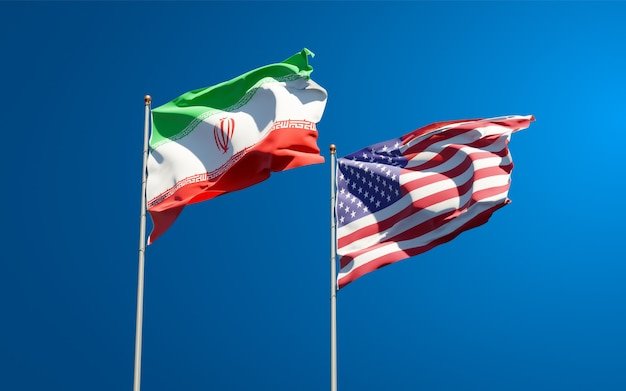
The underlying event is whether Washington and Tehran begin another formal, senior-level round of peace talks before the deadline. The market is not asking whether the current process continues in technical form; it needs a deliberate in-person diplomatic round at a senior level to start, so a quiet channel of contact is not enough on its own.
The closest analogue is a negotiation market where the *headline* can move faster than the *mechanics*. Early progress in Switzerland was reported as encouraging, with mediators saying the sides agreed a roadmap and technical talks would continue, but that does not guarantee a fresh senior meeting follows on schedule.[2][5] That split matters because these markets often price the public narrative more heavily than the procedural reality: promises of talks can sound imminent, while actual openings depend on delegation composition, venue, and whether both sides are willing to confirm direct engagement. Reuters later reported follow-on indirect talks in Doha focused on the Strait of Hormuz and frozen funds rather than a breakthrough, which reinforces the gap between continuing diplomacy and a qualifying round for settlement.[1]
For traders, the main catalysts are official scheduling statements, mediator readouts, and any confirmation that top-level envoys will meet in person rather than through intermediaries. Recent reporting has kept the process alive but inconsistent: BBC said the initial talks produced a roadmap within 60 days and technical discussions would continue, while Reuters and later coverage described Doha talks as unresolved and, at times, indirect.[2][1][7] Al Jazeera also reported in early August that Trump said talks were ongoing, yet Iran denied direct negotiations, underscoring how much turns on wording, not just contact.[3][11]
Methodology
Entertainment-specific comparison page for Next round of US-Iran peace talks by 2026?. Polymarket's live quote (Polygon order book) shows the award probability. For awards markets, Polymarket usually has the deepest liquidity; Betfair runs comparable markets for Oscars/Emmys; Manifold for Eurovision.
Resolution & payout
Entertainment markets settle on official award ceremony or show end. Polymarket uses UMA Optimistic Oracle with a source URL to the official award website. Two-hour dispute window, then smart-contract payout in USDC.
FAQ
- When do award markets resolve?
- After the official announcement — e.g. Oscars ceremony end for Academy Awards markets, Eurovision final end for ESC markets. UMA Optimistic Oracle typically uses the official award website as the resolution source.
- How accurate are award predictions?
- Variable. Industry-predictable awards (Oscar Best Picture) have high market accuracy (Brier ~0.15). Reality-TV outcomes with small markets carry more noise. Eurovision is notorious for market upsets due to bloc voting.
- What was the top Oscar 2025 market?
- Best Picture, with ~$2.8M volume on Polymarket. "Anora" started as an underdog at ~8% and closed at ~62% before the ceremony — the biggest single Oscar market swing since 2019.
- How are reality-TV outcomes verified?
- UMA Oracle uses the official show website or producer statement as the resolution source. Very narrowly defined markets (e.g. "Will X be voted off the island?") rely on the official show notes.
- Are there politics-entertainment crossover markets?
- Yes — e.g. "Will X be parodied on SNL?", "Who will host the next Oscars?". These have thinner liquidity but offer alpha for traders who read pop-culture and political worlds together.
%22%2F%3E%3Cpath%20d%3D%22M%206%2066%20A%2026%2026%200%200%201%2058%2066%22%20fill%3D%22%23E6B98D%22%20opacity%3D%220.9%22%2F%3E%3Ccircle%20cx%3D%2232%22%20cy%3D%2226%22%20r%3D%2222%22%20fill%3D%22%23F5CBA7%22%2F%3E%3Cpath%20d%3D%22M%2010%2026%20A%2022%2028%200%200%201%2054%2026%22%20fill%3D%22%23f472b6%22%20opacity%3D%220.9%22%2F%3E%3C%2Fsvg%3E) and
and%22%2F%3E%3Cpath%20d%3D%22M%206%2066%20A%2026%2026%200%200%201%2058%2066%22%20fill%3D%22%23E6B98D%22%20opacity%3D%220.9%22%2F%3E%3Ccircle%20cx%3D%2232%22%20cy%3D%2226%22%20r%3D%2222%22%20fill%3D%22%23F5CBA7%22%2F%3E%3Cpath%20d%3D%22M%2010%2018%20Q%2016%204%2026%2010%20Q%2020%202%2032%206%20Q%2044%202%2038%2010%20Q%2048%204%2054%2018%22%20stroke%3D%22%23f472b6%22%20stroke-width%3D%224%22%20fill%3D%22none%22%20stroke-linecap%3D%22round%22%2F%3E%3C%2Fsvg%3E)
Trade Next round of US-Iran peace talks by 2026? on Oscar Predictions 2026
Live order book, 0% fees, USDC settlement in seconds.
Open live market →